
PlayStation
The complete history of Sony's original PlayStation
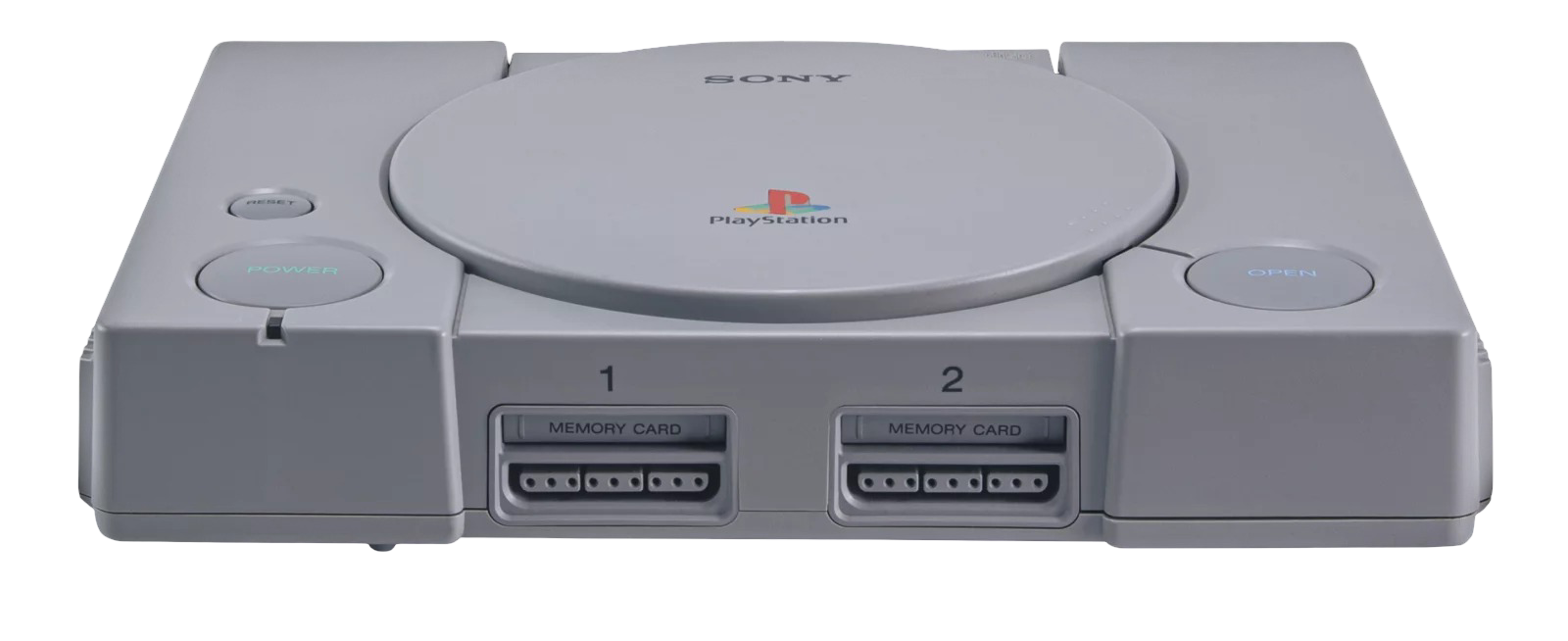
The original PlayStation changed the video game industry. What began as a troubled partnership with Nintendo became Sony's first home console and ultimately one of the defining machines of the 1990s.
The PlayStation helped move console gaming toward 3D graphics, CD-ROM media, cinematic presentation and a new generation of developers who were no longer limited by the conventions of the 16-bit era.
Research & Development
The story of PlayStation begins with Sony engineer Ken Kutaragi. During the late 1980s, Kutaragi became interested in the growing video game business and helped develop the sound processor used in Nintendo's Super Famicom and Super Nintendo.
Sony and Nintendo later worked together on a proposed CD-ROM expansion for the Super Nintendo. The partnership deteriorated, however, and Nintendo publicly pursued another agreement with Philips.
Rather than abandoning the work, Sony moved forward with its own console project. The result was a standalone CD-based system designed around fast 3D graphics and relatively developer-friendly hardware.
The Launch
Japan
PlayStation launched in Japan on December 3, 1994. Early games included Ridge Racer, which immediately demonstrated how effectively the machine could bring arcade-style 3D graphics into the home.
North America
Sony launched the PlayStation in North America on September 9, 1995 for $299.
The price became legendary after Sony executive Steve Race walked onto the stage at E3 and simply announced:
PlayStation Timeline
PlayStation Startup
Press play for the original PlayStation startup sequence.
Hardware Models
SCPH-1001
Original North American Launch Model
The earliest U.S. PlayStation featured the original rear I/O layout, including RCA audio/video outputs and the expansion port.
SCPH-5501
Revised Hardware
Sony continued simplifying the internal design of the console while refining the CD drive and board layout.
SCPH-7001 / 7501
Late 1990s Revisions
Further internal revisions reduced manufacturing costs while keeping the basic PlayStation design recognizable.
SCPH-9001
Final Full-Size Revision
The SCPH-9001 removed the rear parallel I/O port and represented one of the final major revisions of the original gray console.
PS one
SCPH-101
Released in 2000, the PS one dramatically reduced the size of the original hardware and introduced the rounded white design associated with the console's final years.
Technical Specifications
Controllers
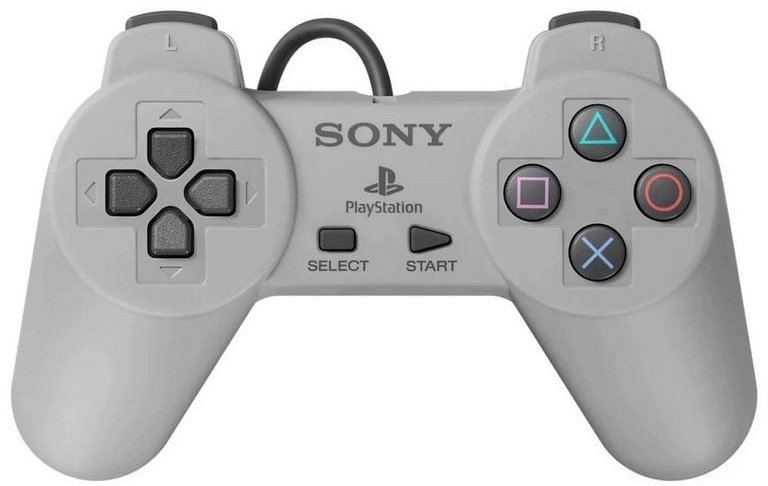
Original Controller
The original PlayStation pad established Sony's four-symbol face-button layout: Triangle, Circle, Cross and Square.
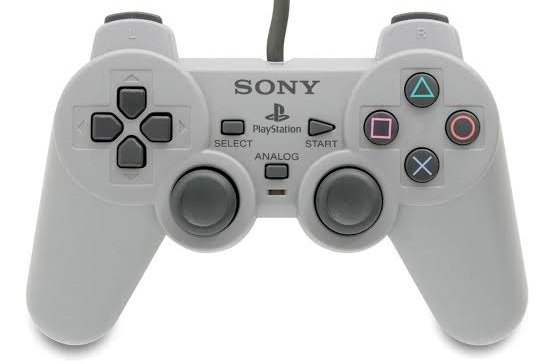
Dual Analog
Sony's first PlayStation controller with two analog sticks laid the foundation for the controller design Sony still uses today.
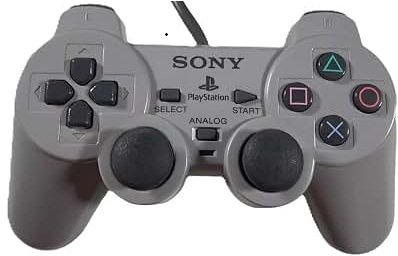
DualShock
The DualShock combined twin analog sticks with vibration and became the definitive PlayStation controller.
Accessories
Additional Info
The Parallel I/O Port
Early PlayStation models included a rear parallel I/O port. It became especially well known for cheat devices, development tools and unofficial hardware.
CD Audio
PlayStation discs were standard optical media and some games used conventional CD audio tracks. Certain game discs could even expose soundtrack audio when played in compatible CD players.
The Wobbling Polygons
One of the machine's most recognizable visual traits comes from limitations in the PlayStation's graphics hardware and rendering pipeline. Texture warping, polygon jitter and affine texture mapping are now part of the visual identity people associate with PS1 games.
The Black Discs
Retail PlayStation CDs became instantly recognizable because of their dark, almost black data surface.